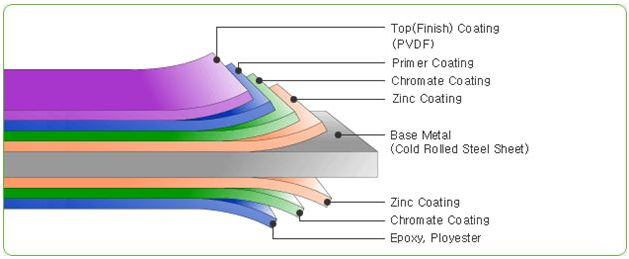
Color-coated steel coils (PPGI and PPGL) are more than just painted metal. Their long-term durability, weather resistance, and formability rely on a precise synergy between the steel substrate, chemical pre-treatment, and advanced multi-layer paint systems. For construction contractors and manufacturing procurement teams, understanding the technical specifications behind these coils is critical to preventing premature corrosion and coating failure.
1. Substrate Metallurgy: The Core of Corrosion Resistance
The structural integrity of any color-coated coil begins with its base metal. The two most common substrates dictate the coil’s baseline anti-corrosion performance:
- HDG (Hot-Dip Galvanized): Uses a pure zinc coating (typically Z40 to Z275). The zinc provides sacrificial anodic protection, meaning the zinc will oxidize before the underlying steel is exposed to moisture.
- Galvalume (GL): Coated with an alloy of 55% aluminum, 43.4% zinc, and 1.6% silicon. Galvalume offers superior barrier protection and heat resistance, making PPGL coils ideal for harsh, high-temperature, or highly corrosive environments.
2. Advanced Paint Systems: Selecting the Right Chemistry
The top coating is the first line of defense against UV radiation, moisture, and chemical exposure. Different paint chemistries offer distinct performance metrics:
| Paint System | UV Resistance | Flexibility | Best Application |
| PE (Polyester) | Moderate | High | Standard roofing, interior wall panels |
| SMP (Silicone Modified) | High | Moderate | Extreme weather regions, industrial buildings |
| HDP (High-Durability) | Very High | High | High UV exposure areas, commercial exteriors |
| PVDF (Fluorocarbon) | Exceptional | Medium | Corrosive coastal zones, architectural facades |
Key technical note: The total Dry Film Thickness (DFT) is a critical quality indicator. A standard high-quality PPGI coil typically features a 15-25 µm top coat (including primer) and a 5-10 µm back coat.
3. Physical Testing and Quality Control
Before a color-coated steel coil is cleared for profiling or roll-forming, it must pass rigorous mechanical and chemical tests to ensure the paint will not crack or peel during fabrication:
- T-Bend Test: Measures the flexibility of the coating. A rating of 0T to 2T indicates the metal can be folded onto itself without the paint fracturing.
- MEK Wiping Test: Evaluates the chemical curing and cross-linking of the paint. The surface is rubbed with Methyl Ethyl Ketone (MEK); high-quality baking will resist 100+ double rubs without exposing the primer.
- Salt Spray Test: Simulates long-term coastal exposure to verify the combined effectiveness of the metallic layer and the paint system in preventing rust creepage.
At SDY Steel Manufacturer, we strictly control every variable—from substrate galvanization to high-temperature curing—ensuring our coils meet global engineering standards. If you need technical assistance selecting the right coating weight or paint system for your next project, explore our specifications at www.sdysteel.com or contact our engineering sales team directly at +86198 6351 8625.